|
|
| Big Island, Hawaii |
|
Kipahoehoe Natural Area Reserve |
 |
|
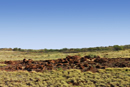
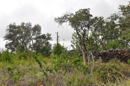
Kipahoehoe Natural Area Reserve is a narrow piece of land running down the southwest slopes of Mauna Loa in the district of South Kona. It includes a rare lowland grassland, as well as mesic and wet forests of `ohi`a and koa. Recent volcanic flows run through the Reserve, leaving a variety of different aged communities. |
| Big Island, Hawaii |
|
Manuka Natural Area Reserve - Manuka State Wayside Park |
 |
|
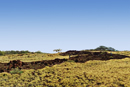
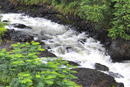
On the flank of leeward Mauna Loa in South Kona, Manuka encompasses a wide range of habitats. These include subalpine shrublands and forests, mesic montane kipuka forests, wet montane forests, lowland mesic forests and lowland dry forests. Recent lava flows add a variety of pioneer vegetation types, as well as uncharacterized and unsurveyed lava tubes. Concentrations of the Hawaiian hoary bat occur in the area. A rare lowland grassland and anchialine pools are included as well. |
 |
| Big Island, Hawaii |
|
Pu'u O Umi Natural Area Reserve |
 |
|
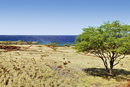
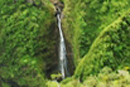
This Reserve includes the wet summit lands of the Kohala Mountains, with two rare kinds of montane bogs surrounded by `ohi`a forests, shrublands, and grasslands. The Reserve extends downslope to the Kohala sea cliffs and a coastal dry grassland. Rare plants are known from bogs and forests. The steep cliffs of Waipi`o and Waimanu valleys form part of the Reserve boundary. Numerous streams run through the area. The Reserve is an important watershed for the region. |
|
| Big Island, Hawaii |
|
Waimanu National Estuarine Research Reserve - Waimanu Valley |
 |
|
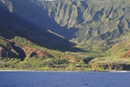
The Muliwai Trail to Waimanu Valley is a strenuous 9-mile switchback trail that climbs 1,200 ft to the top of a ridge, then descends into the Waimanu Valley. The views into Waipio Valley as you start up the trail (often called Z-Trail) are incredible. If you thought the view from the Waipio Valley lookout was fantastic. We recommend hiking across Waipio Beach to the other side and up the valley wall for a peek into the heart of Waipio. You can see the trail from the lookout. It is the zigzag cut into the side of the cliff. When hiking across the beach you will have to wade through Waipio River which dumps into the ocean. |
|
| Big Island, Hawaii |
|
Mauna Kea Ice Age Natural Area Reserve |
|
|
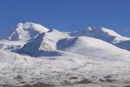
Sparsely vegetated cinder and lava deserts on the southern summit flank of Mauna Kea include two rare communities: an invertebrate-dominated aeolian desert and the state's only alpine lake. Important archeological and geological features are also present.
|
| Big Island, Hawaii |
|
Kipuka Ainahou State Nene Sanctuary |
 |
|
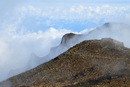
Kipuka Ainahou State Nene Sanctuary was officially established in 1974. The Kipuka Ainahou State Nene Sanctuary has about 38,000 acres. The Kipuka Ainahou State Nene Sanctuary extends from Saddle Road to the flank of Mauna Loa on State owned land. Elevation is between 6,000 and 9,000 feet above sea level. |
|
| Big Island, Hawaii |
|
Laupahoehoe Natural Area Reserve |
 |
|
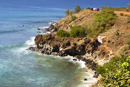
On the slopes of windward Mauna Kea, Laupahoehoe includes examples of wet montane forests of `ohi`a and koa. The poorly drained portions contain wet grasslands and small montane lakes. Numerous streams run through the Reserve. Laupahoehoe is located in the North Hilo District on the island of Hawaii, and stretches from just above 1,600 feet to about 4,600 feet elevation. Hakalau National Wildlife Refuge is adjacent to Laupahoehoe Reserve, and protects habitat for several endangered forest birds known to occur in Laupahoehoe as well. Five native natural communities can be observed in the Laupahoehoe Reserve, including a tall-stature koa/`ohia forest in both montane and lowland zones, `ohia/hapu`u (Cibotium spp.) forest, Carex alligata wet grassland, and non-native dominated patches. |
|
| Big Island, Hawaii |
|
Hakalau Forest National Wildlife Refuge |
 |
|
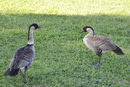
Hakalau Forest was established in 1985 to protect and manage endangered Hawaiian forest birds and their rain forest habitat. Located on the windward slope of Mauna Kea, Island of Hawai‘i, the 32,733-acre Hakalau Forest Unit supports a diversity of native birds and plants equaled by only one or two other areas in the State of Hawai‘i. Eight of the 14 native bird species occurring at Hakalau are endangered. Thirteen migratory bird species and 20 introduced species, including eight game birds, as well as the endangered ‘ope‘ape‘a (Hawaiian hoary bat) also frequent the refuge. Twenty-nine rare plant species are known from the refuge and adjacent lands. Twelve are currently listed as endangered. Two endangered lobelias have fewer than five plants known to exist in the wild. |
|
| Big Island, Hawaii |
|
Kipuka Puaulu ( Bird Park ) |
 |
|
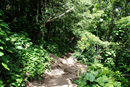
Kipuka is surrounded on all sides lava flows. Left undisturbed for a long time, an ecosystem, such as that a Kipuka Puaulu, forms. Puaulu, also called Bird Park, is an old ohia tree and fern forest which is home to many of the feathered residents of the Big Island. A 30-minute stroll along this 1-mile trail will reveal several different high elevation birds, including the colorful Khalij Pheasant. Kipuka Puaulu is located in Hawaii Volcanoes National Park on Mauna Loa Road just outside the park gate. It is located 1.5 miles up the road, just past the tree molds. Kipuka Puaulu Bird Park is located in the Volcano |
| Big Island, Hawaii |
|
Kahaualea Natural Area Reserve |
 |
|
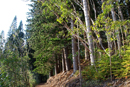
Kahauale`a includes representatives of pioneer vegetation on lava flows, lowland rain forest and mesic forest in the Puna District. It includes the largest known populations of a federally endangered fern, Adenophorus periens, as well as the currently active flows of the Pu`u O`o vent |
|
| Big Island, Hawaii |
|
Kealakekua Bay Marine Life Conservation District |
|
|
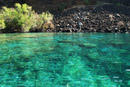
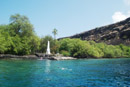
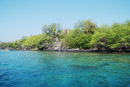
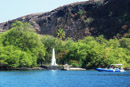
315 acres, Established 1969. Kealakekua Bay is located about 30 minutes south of Kailua-Kona. The only access by car is to Napo'opo'o Beach, which is located on the bay's eastern shoreline. From Kailua-Kona, take Hwy 11 south to the Napo'opo'o turn-off (about 18 miles), then turn right and drive 4 miles to the bay. Ka'awaloa Cove, at the bay's northern end, can be accessed only by boat, and a number of dive tours operate in the area.
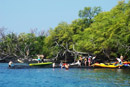
lakekua Bay settled over a thousand years ago, the surrounding area contains many archeological and historical sites such as religious temples, and was listed in the National Register of Historic Places listings on the island of Hawaii in 1973 as the Kealakekua Bay Historical District. The bay is a marine life conservation district, a popular destination for kayaking, Scuba diving and snorkeling.
|
|
| Big Island, Hawaii |
|
Lapakahi Marine Life Conservation District |
|
|
146 acres, Established 1979. Located on the northwestern coast of Hawai`i, Lapakahi is about 12 miles north of Kawaihae. Take Hwy 270 north from Kawaihae to Lapakahi State Historical Park. The park entrance is on the left side of the highway, and marked with a sign. Parking is available at the end of the road.
The MLCD is divided into two subzones. Subzone A includes Koai`e Cove, and Subzone B includes the waters 500 feet outside of Subzone A and extending southward along the shoreline adjacent to the park, from the highwater mark to a distance of 500 feet offshore.
|
|
| Big Island, Hawaii |
|
Old Kona Airport Marine Life Conservation District |
|
|
146 acres, Established 1979. Old Kona Airport is located on the western coast of Hawai`i just west of Kailua-Kona town. At the intersection of Palani Road and Kuakini Hwy turn west and proceed past the old industrial area.
The MLCD includes the waters offshore of the Old Kona Airport State Park and adjacent private properties. It is bounded by a straight line seaward 500 yards from the western end of the park, to a straight line seaward 500 yards from the Kailua lighthouse. A "No Boating Zone" exists in the waters off the park as indicated.
|
|
| Big Island, Hawaii |
|
Waialea Bay Marine Life Conservation District |
|
|
35 acres, Established 1985. Waialea Bay is located in the southern portion of Kawaihae Bay, on the western coast of Hawai`i. Take Hwy 19 north about 23 miles from Kailua-Kona (or south from Kawaihae about 5 miles), and turn onto Puako Beach Drive. Then take the first right onto Old Puako Road, and watch the numbers on the telephone poles. Turn left between poles 69 and 70. The road is rough, but driveable. Parking is available near the beach.
The MLCD extends from the highwater mark seaward to a line from the point immediately north of Ohai Point to Kanekanaka Point.
|
|
| Big Island, Hawaii |
|
Waiopae Tidepools Marine Life Conservation District |
|
|
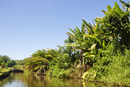
Located on the Southeastern coast of the island of Hawai`i, the Waiopae Tidepools MLCD is about a one hour drive south of the Hilo airport. Take highway 130 heading south, then go east on highway 132 to highway 137. Travel about 1.1 miles south on highway 137 and turn east on Kapoho Kai drive. Follow road to parking areas marked by signs.
The MLCD is located adjacent to a private subdivision called Vacationland. Follow directions to all signs posted; enter tidepools only at the designated shoreline access and respect private property. The MLCD extends from the highwater mark at the shoreline, with the northern boundary next to the first two-story house on the beach north of the parking area, and extends south about 700 meters. Signs mark the boundaries.
|
|
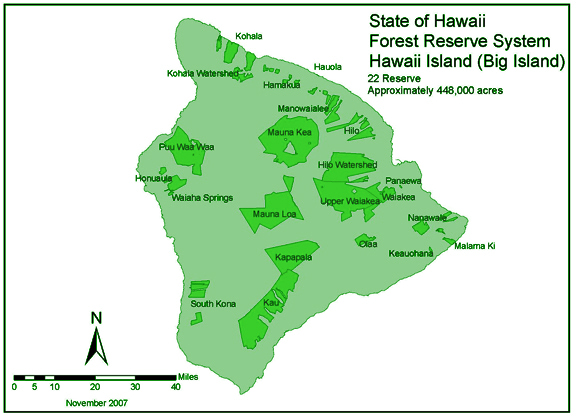 |
| Hamakua Forest Reserve |
| Hauola Forest Reserve |
| Hilo Forest Reserve |
| Hilo Watershed Forest Reserve |
| Honuaula Forest Reserve |
| Kapapala Forest Reserve |
| Kau Forest Reserve |
| Keauohana Forest Reserve |
| Kohala Forest Reserve |
| Kohala Watershed Forest Reserve |
| Malama Ki Forest Reserve |
| Manowaialee Forest Reserve |
| Mauna Kea Forest Reserve |
| Mauna Loa Forest Reserve |
| Nanawale Forest Reserve |
| Olaa Forest Reserve |
| Panaewa Forest Reserve |
| Puu Waa Forest Reserve |
| South Kona Forest Reserve |
| Waiakea Forest Reserve |
| Upper Waiakea Forest Reserve |
| Waiaha Springs Forest Reserve |
|
|
|